

Expert Guidance for College Admission Success For millions of students, college admission represents one of the most important milestones in their academic journey. Yet the process can often feel overwhelming. Between maintaining strong grades, preparing for standardized tests, building extracurricular activities, writing application essays, securing recommendation letters, and meeting deadlines, it’s easy to feel stressed or uncertain.
The reality is that successful college admissions rarely happen by accident. Students who gain admission to competitive colleges usually follow a thoughtful strategy, prepare early, and understand exactly what admissions officers are looking for.
The good news is that you don’t need perfect grades or extraordinary achievements to stand out. What you need is a clear plan, consistent effort, and the right guidance.
This comprehensive guide provides expert guidance for college admission success, helping students and families navigate every stage of the admissions journey with confidence and clarity.
Quick Answer Box
What is the best expert guidance for college admission success?
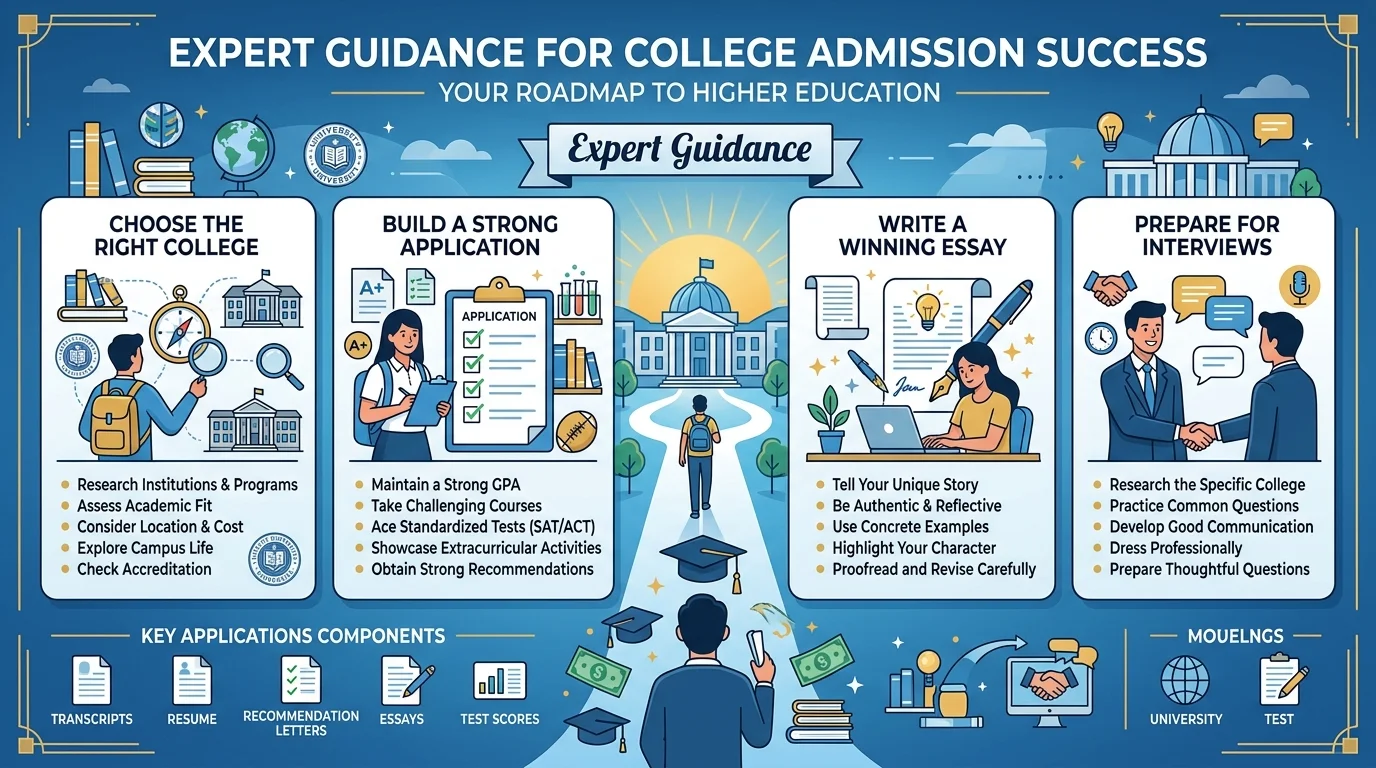
The best expert guidance for college admission success includes maintaining strong academic performance, building meaningful extracurricular involvement, creating a balanced college list, writing authentic application essays, securing strong recommendations, meeting deadlines, and demonstrating genuine interest in colleges. Consistent preparation and strategic planning significantly improve admission outcomes.
Understanding Modern College Admissions
College admissions have become increasingly competitive.
Admissions officers evaluate much more than grades alone.
Most colleges consider:
- Academic performance
- Course rigor
- GPA
- Test scores (where applicable)
- Personal essays
- Extracurricular involvement
- Leadership experience
- Community service
- Recommendation letters
- Special achievements
Successful applicants demonstrate both academic ability and personal character.
Why Expert Guidance for College Admission Success Starts Early
One of the biggest mistakes students make is waiting until senior year to prepare.
Strong college applications are built over several years.
Benefits of early planning include:
- Better GPA development
- Stronger extracurricular profiles
- Reduced stress
- More scholarship opportunities
- Better essay preparation
- Improved test readiness
- More college options
The earlier students begin planning, the more opportunities they create for themselves.
Expert Guidance for College Admission Success Through Strong Academics
Academic performance remains the most important admission factor for most colleges.
Focus on:
Maintaining a Competitive GPA
Admissions officers often view GPA as an indicator of consistency and discipline.
Strategies include:
- Completing assignments on time
- Seeking academic support early
- Developing study routines
- Managing time effectively
Taking Challenging Courses
Rigorous coursework demonstrates readiness for college-level academics.
Examples include:
- Honors classes
- Advanced Placement (AP)
- International Baccalaureate (IB)
- Dual enrollment courses
Colleges often value course rigor alongside grades.
Expert Guidance for College Admission Success Through Extracurricular Activities
Admissions officers prefer depth over quantity.
Instead of joining many clubs, focus on activities that genuinely interest you.
Strong extracurricular examples:
- Student government
- Academic competitions
- Athletics
- Volunteer work
- Entrepreneurship
- Music and arts
- Research projects
- Community leadership
- Debate teams
- Internship experiences
Quality involvement matters more than simply collecting activities.
Expert Guidance for College Admission Success When Choosing Colleges
Many students make the mistake of applying only to highly selective institutions.
A balanced college list typically includes:
Reach Schools
Colleges where admission is highly competitive.
Match Schools
Colleges where your academic profile aligns closely with admitted students.
Safety Schools
Colleges where admission is highly likely.
A balanced strategy reduces risk and increases opportunities.
Expert Guidance for College Admission Success in College Essays
The personal essay is your opportunity to become more than a transcript.
Strong essays often reveal:
- Character
- Growth
- Resilience
- Values
- Personal experiences
- Future goals
Essay Tips
- Be authentic
- Tell a meaningful story
- Show personal growth
- Avoid clichés
- Focus on specific experiences
- Edit carefully
The best essays sound human, not manufactured.
Secure Strong Letters of Recommendation
Recommendation letters provide insight into who you are beyond academics.
Choose recommenders who:
- Know you well
- Have observed your growth
- Can provide specific examples
- Support your goals
Good recommenders often include:
- Teachers
- Counselors
- Coaches
- Mentors
Always ask early and express appreciation.
Expert Guidance for College Admission Success Through Leadership
Leadership doesn’t always mean holding a title.
Admissions officers value students who:
- Solve problems
- Take initiative
- Create positive change
- Support others
- Lead projects
Examples include:
- Organizing community events
- Starting a club
- Launching a small business
- Leading volunteer programs
- Mentoring younger students
Leadership shows maturity and impact.
Expert Guidance for College Admission Success During Interviews
Some colleges conduct interviews as part of the admissions process.
Preparation tips:
- Research the institution
- Practice common questions
- Dress appropriately
- Maintain eye contact
- Demonstrate enthusiasm
- Ask thoughtful questions
Common interview topics include:
- Academic interests
- Career goals
- Personal strengths
- Extracurricular involvement
Confidence and authenticity are key.
Understand Financial Aid and Scholarships
Many families overlook scholarship opportunities.
Financial planning should begin early.
Sources of funding include:
- Merit scholarships
- Need-based aid
- Institutional grants
- Private scholarships
- State programs
- Federal aid
Completing financial aid applications promptly can maximize eligibility.
Avoid Common Admission Mistakes
Many strong students hurt their chances through preventable errors.
Common mistakes include:
Missing Deadlines
Late applications may not be considered.
Generic Essays
Admissions officers notice recycled content.
Weak College Research
Students should understand why each college fits their goals.
Overloading Activities
Quality matters more than quantity.
Ignoring Application Instructions
Small mistakes can create negative impressions.
Attention to detail matters.
Building a Strong Personal Brand
Today’s applicants often benefit from developing a clear narrative.
Ask yourself:
- What are my strengths?
- What am I passionate about?
- What impact have I made?
- What goals do I have?
A strong personal story helps applications feel cohesive and memorable.
Did You Know?
Admissions officers often spend only a limited amount of time reviewing each application.
That means every component—grades, essays, recommendations, and activities—must work together to communicate a compelling and authentic story.
Small improvements across multiple areas can create a significant competitive advantage.
College Admission Timeline
Freshman Year
- Build strong study habits
- Explore interests
- Focus on academics
Sophomore Year
- Increase involvement
- Develop leadership skills
- Begin researching colleges
Junior Year
- Take challenging courses
- Visit colleges
- Prepare for testing
- Build college list
Senior Year
- Complete applications
- Submit essays
- Apply for scholarships
- Meet deadlines
Planning reduces stress throughout the process.
Frequently Asked Questions
What is the most important factor in college admissions?
Academic performance remains one of the most influential factors. Colleges often evaluate GPA, course rigor, and overall academic consistency when reviewing applications.
How early should students prepare for college admissions?
Ideally, students should begin preparing during their freshman year of high school. Early preparation allows more time to build academic strength, extracurricular involvement, and leadership experience.
Do extracurricular activities matter?
Yes. Meaningful extracurricular involvement demonstrates initiative, commitment, leadership, and personal interests beyond academics.
How important are college essays?
Essays play a critical role because they help admissions officers understand your personality, experiences, and values beyond grades and test scores.
What makes a college application stand out?
Strong applications combine academic achievement, authentic storytelling, leadership, community involvement, and a clear sense of purpose.
Can students get admitted without perfect grades?
Absolutely. Many colleges use holistic admissions processes that consider multiple factors beyond GPA, including essays, recommendations, extracurricular activities, and personal achievements.
Conclusion
Achieving expert guidance for college admission success starts with understanding that admissions is not a single event—it’s a process built over time.
Students who plan early, maintain strong academics, pursue meaningful activities, write authentic essays, and present a compelling personal story position themselves for greater success.