

Things to Say When Someone Dies Learning that someone has passed away is one of life’s most difficult moments. Whether it’s a close family member, friend, coworker, or neighbor, finding the right words can feel almost impossible. You want to offer comfort and support, but you may worry about saying the wrong thing or making the grieving person feel worse.
The truth is that most grieving people are not looking for perfect words. They simply want to know that someone cares. A sincere expression of sympathy, a thoughtful message, or a willingness to listen can mean more than you realize.
Many people search for things to say when someone dies because they want to show compassion without sounding awkward or insensitive. The good news is that even simple phrases can provide tremendous comfort during a painful time.
In this guide, you’ll discover the best things to say when someone dies, including sympathy messages, condolences, funeral phrases, and comforting words for grieving family members and friends.
Quick Answer Box
What are the best things to say when someone dies?
The best things to say when someone dies are simple, sincere, and compassionate. Phrases such as “I’m so sorry for your loss,” “I’m here for you,” and “Your loved one will always be remembered” offer comfort and support. Genuine empathy matters far more than finding perfect words.
Why Things to Say When Someone Dies Matter During Grief
When someone loses a loved one, they often feel overwhelmed, shocked, sad, or even numb.
Thoughtful words can:
✔️ Show support
✔️ Reduce feelings of loneliness
✔️ Provide emotional comfort
✔️ Honor the memory of the deceased
✔️ Strengthen relationships
Even a short message can make a lasting impact during difficult times.
Best General Things to Say When Someone Dies
These universal condolence messages work in most situations.
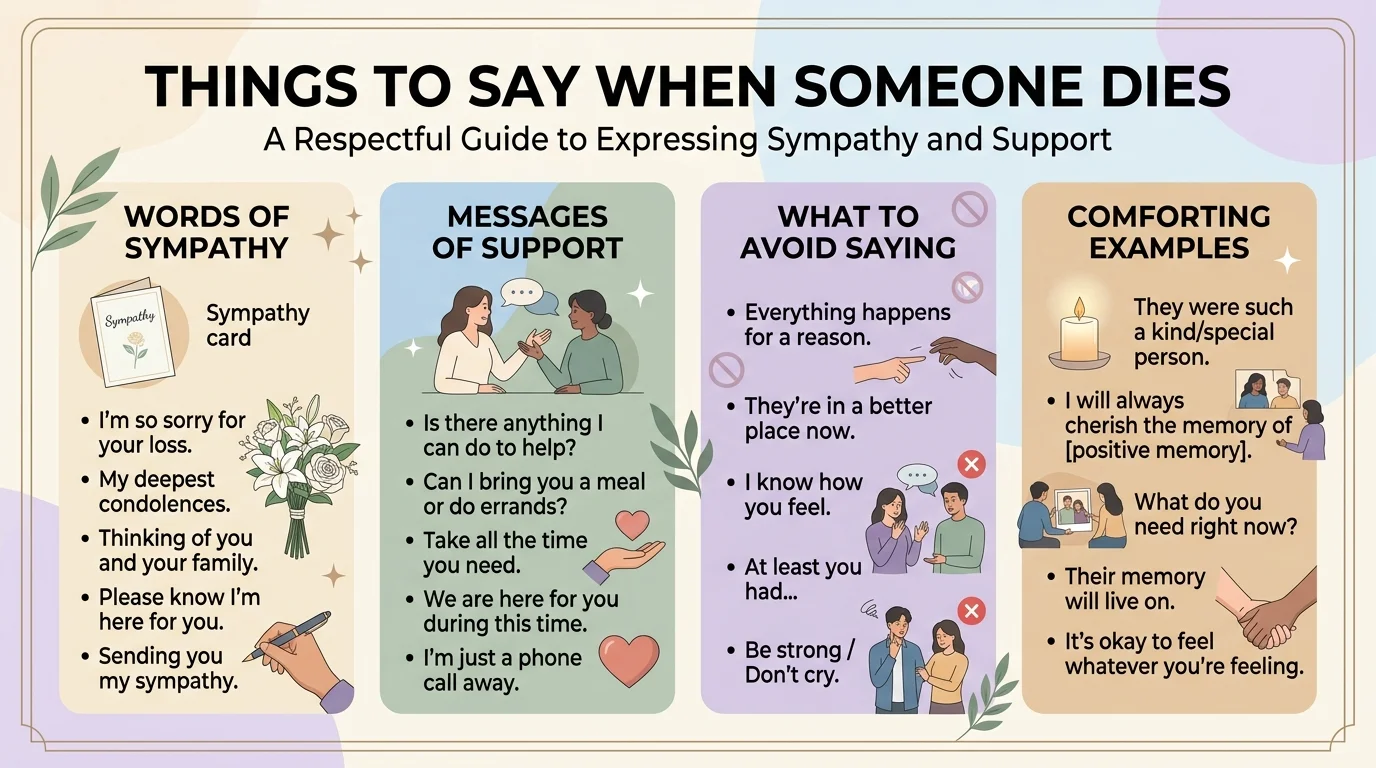
✔️ “I’m so sorry for your loss.”
✔️ “My heart goes out to you.”
✔️ “You and your family are in my thoughts.”
✔️ “I’m thinking of you during this difficult time.”
✔️ “Please accept my deepest condolences.”
When to use: Funeral services, sympathy cards, texts, or face-to-face conversations.
Vibe: Respectful, compassionate, and supportive.
✔️ “I can’t imagine how difficult this must be.”
✔️ “I’m here if you need anything.”
✔️ “Sending you love and strength.”
✔️ “Your loved one will never be forgotten.”
✔️ “Please know you’re not alone.”
When to use: Close friends, family members, coworkers, and acquaintances.
Vibe: Warm and comforting.
Heartfelt Things to Say When Someone Dies to a Close Friend
When a close friend loses someone, a more personal message often helps.
✔️ “I’m here for you every step of the way.”
✔️ “You don’t have to go through this alone.”
✔️ “I wish I could take away your pain.”
✔️ “I’m only a phone call away.”
✔️ “Take all the time you need.”
When to use: Best friends and people you’re emotionally close to.
Vibe: Deeply caring and personal.
✔️ “Your grief is valid.”
✔️ “I love you and support you.”
✔️ “Lean on me whenever you need to.”
✔️ “I know how much they meant to you.”
✔️ “I’m keeping you in my thoughts.”
Meaningful Things to Say When Someone Dies in the Family
Family members often appreciate messages that acknowledge both their loss and their loved one’s legacy.
✔️ “Your mother was an amazing person.”
✔️ “Your father touched many lives.”
✔️ “Their kindness will always be remembered.”
✔️ “What a beautiful life they lived.”
✔️ “Their memory will live on.”
When to use: Family gatherings, funeral services, sympathy cards.
Vibe: Respectful and honoring.
✔️ “They made a difference in so many lives.”
✔️ “Their love will always be with you.”
✔️ “I feel fortunate to have known them.”
✔️ “They left behind a remarkable legacy.”
✔️ “Their impact will never be forgotten.”
Things to Say When Someone Dies in Text Messages and Social Media
Many people offer condolences through text messages today.
✔️ “I’m so sorry for your loss ❤️”
✔️ “Thinking of you and your family.”
✔️ “Sending prayers and love.”
✔️ “Keeping you in my thoughts.”
✔️ “My deepest condolences.”
When to use: Text messages, social media comments, DMs.
Vibe: Brief but sincere.
✔️ “Sending strength during this difficult time.”
✔️ “Wishing you comfort and peace.”
✔️ “My heart is with you.”
✔️ “Please reach out if you need anything.”
✔️ “You are loved and supported.”
Professional Things to Say When Someone Dies at Work
For coworkers, clients, or professional relationships.
✔️ “Please accept my sincere condolences.”
✔️ “Thinking of you during this difficult time.”
✔️ “Our thoughts are with you and your family.”
✔️ “Wishing you strength and comfort.”
✔️ “We are deeply sorry for your loss.”
When to use: Workplace settings.
Vibe: Professional and respectful.
✔️ “Take all the time you need.”
✔️ “Our team is here to support you.”
✔️ “Sending heartfelt sympathy.”
✔️ “Please know we are thinking of you.”
✔️ “Wishing you peace and healing.”
Things to Say When Someone Dies at a Funeral
Funerals can feel intimidating because emotions run high.
Simple phrases often work best.
✔️ “I’m so sorry for your loss.”
✔️ “They were truly special.”
✔️ “I’m grateful I knew them.”
✔️ “What a beautiful tribute.”
✔️ “They will be missed.”
When to use: Funeral homes, memorial services, visitations.
Vibe: Respectful and sincere.
✔️ “Their memory will live on.”
✔️ “They touched many lives.”
✔️ “I’m keeping your family in my prayers.”
✔️ “You are in my thoughts.”
✔️ “Thank you for sharing them with us.”
What NOT to Say When Someone Dies
Certain phrases may unintentionally hurt grieving people.
Avoid:
❌ “Everything happens for a reason.”
❌ “At least they’re in a better place.”
❌ “I know exactly how you feel.”
❌ “You’ll get over it.”
❌ “Be strong.”
Why These Can Be Harmful
They may minimize grief or dismiss emotions.
Instead, focus on listening and showing empathy.
Also avoid:
❌ “They’re no longer suffering.”
❌ “Time heals all wounds.”
❌ “You should move on.”
❌ “God needed another angel.”
❌ “At least they lived a long life.”
Better Alternative
A simple “I’m sorry for your loss” is usually more comforting.
Practical Ways to Show Support
Words matter, but actions matter too.
Consider:
✔️ Bringing meals
✔️ Helping with errands
✔️ Offering childcare
✔️ Attending services
✔️ Sending flowers
✔️ Checking in regularly
✔️ Listening without judgment
✔️ Helping with household tasks
Often, practical help provides comfort long after funeral services end.
Did You Know?
Many grieving people remember supportive gestures for years after a loss.
Research consistently shows that genuine social support can reduce feelings of isolation and help people cope with grief more effectively.
Sometimes the most meaningful thing you can say is:
“I’m here for you.”
Frequently Asked Questions
What are the best things to say when someone dies?
The best thing to say is usually “I’m so sorry for your loss.” It’s simple, sincere, and appropriate in almost every situation. Adding a personal memory about the deceased can make your message even more meaningful.
Is it okay to send condolences by text?
Yes. A thoughtful text message is better than saying nothing at all. Keep your message sincere, brief, and supportive while letting the grieving person know you’re thinking about them.
What should I avoid saying to someone who is grieving?
Avoid phrases that minimize grief or attempt to explain the loss. Statements such as “Everything happens for a reason” can unintentionally make a grieving person feel misunderstood.
How can I comfort a friend who lost a loved one?
Listen without judgment, check in regularly, offer practical help, and remind them they are not alone. Consistent support often means more than finding perfect words.
Should I mention the deceased person by name?
Yes. Many grieving people appreciate hearing their loved one’s name and sharing memories. It helps keep their memory alive and acknowledges their importance.
What if I don’t know what to say?
Simple honesty works best. Saying “I don’t have the right words, but I’m thinking of you” can be incredibly meaningful and genuine.
Conclusion
Knowing the right things to say when someone dies can feel challenging, but compassion matters more than perfection. Whether you offer a heartfelt condolence, share a cherished memory, or simply listen, your support can bring comfort during one of life’s most difficult moments.
The most meaningful messages are often the simplest: “I’m sorry for your loss,” “I’m here for you,” and “You are not alone.”