You send a message, and seconds later, the only reply you receive is a simple 👍.
At first, it seems harmless. The thumbs up emoji meaning is one of the most recognized symbols in digital communication. Most people assume it means “okay,” “sounds good,” or “I agree.” But if you’ve spent time on social media lately, you’ve probably noticed that not everyone interprets it the same way.
For some users, the thumbs up emoji meaning is positive, friendly, and supportive. For others, especially younger generations, it can sometimes feel cold, dismissive, passive-aggressive, or even sarcastic. The same emoji can create completely different reactions depending on who sends it, where it’s sent, and the context of the conversation.
So what does the thumbs up emoji actually mean in 2026? Is it rude? Is it professional? Is it flirty? Or is it simply a quick way to acknowledge a message?
This guide breaks down every important aspect of the thumbs up emoji meaning, helping you understand how people use it in texting, social media, relationships, work chats, and everyday conversations.
Quick Answer Box: What Is the Thumbs Up Emoji Meaning?
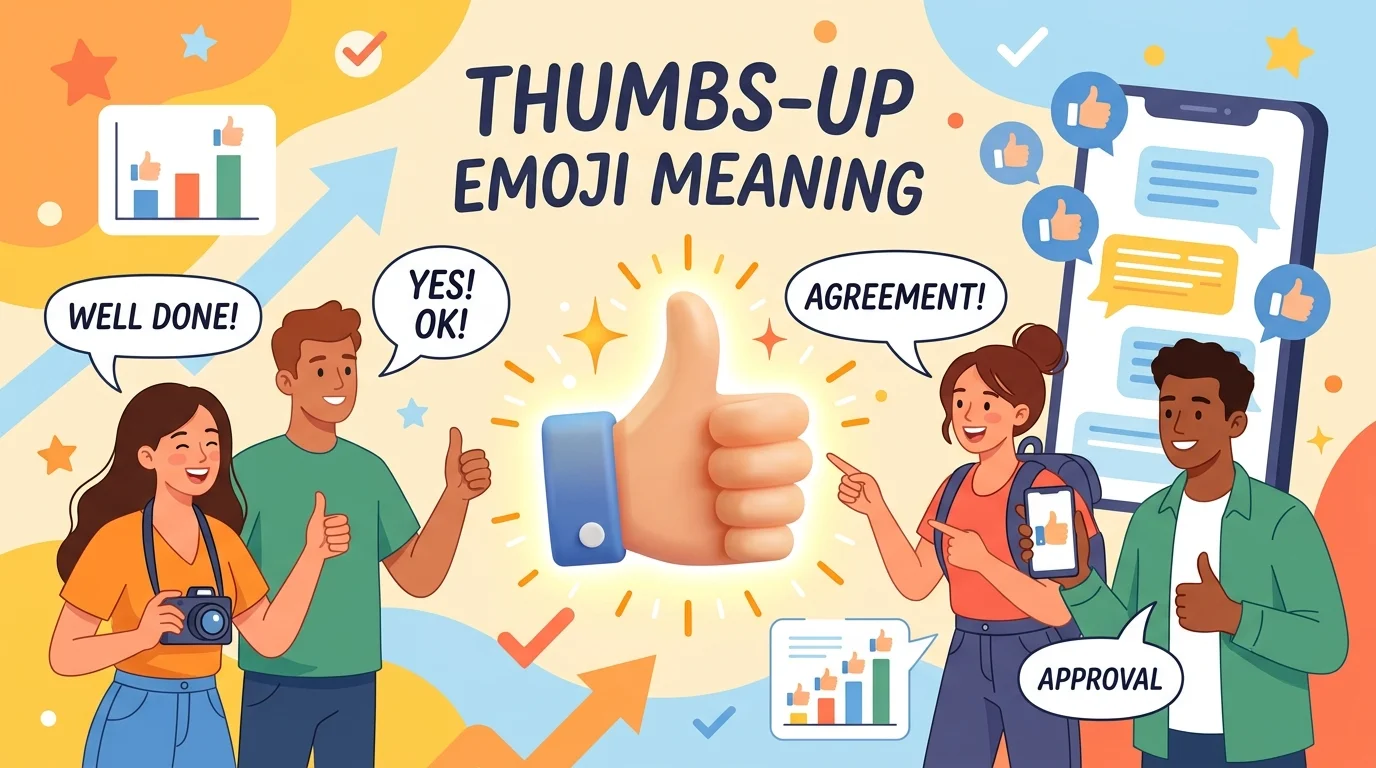
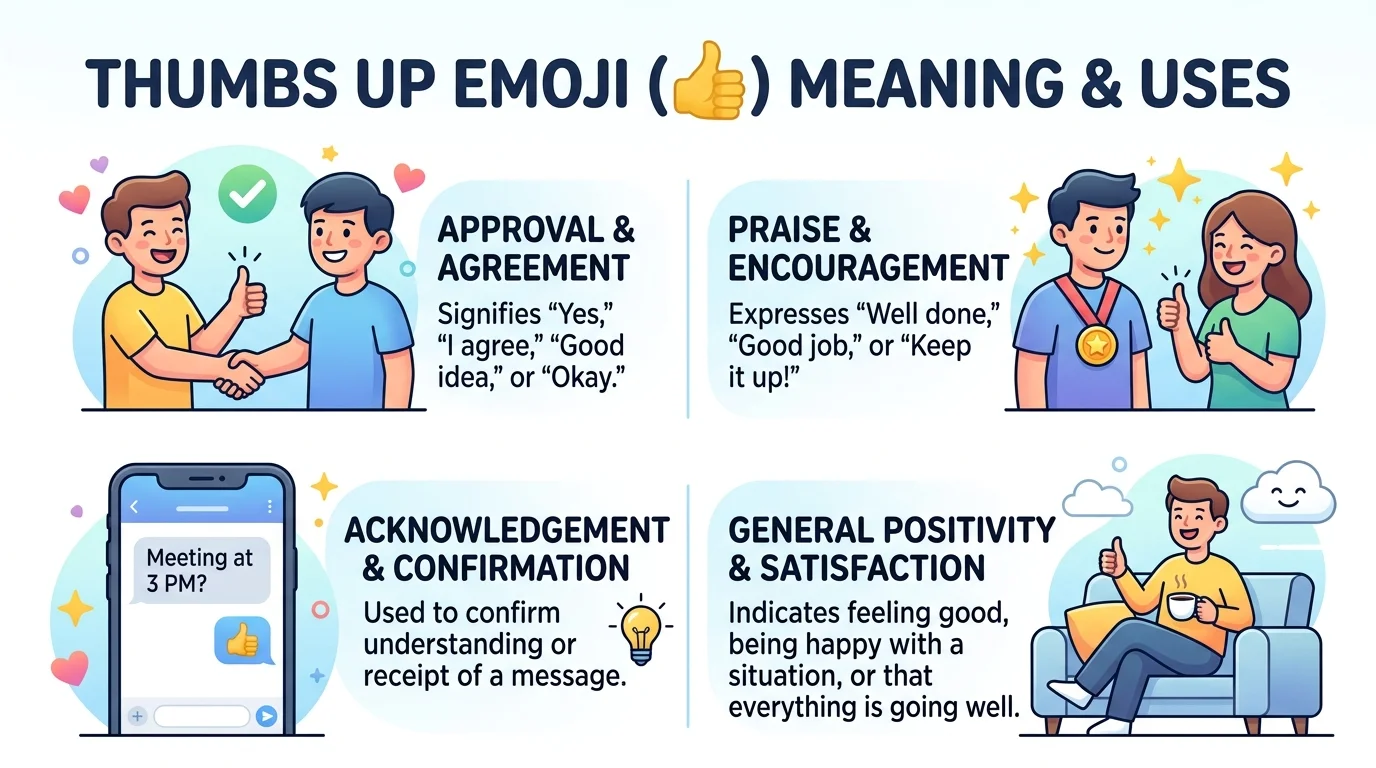
The thumbs up emoji (👍) generally means approval, agreement, acknowledgment, support, or confirmation. It is commonly used to say “okay,” “good job,” “sounds good,” or “message received.” However, depending on context and generation, the thumbs up emoji meaning can also be interpreted as brief, formal, sarcastic, or emotionally distant.
Thumbs Up Emoji Meaning: Understanding the Symbol and Tone
The thumbs up gesture has been used for centuries as a sign of approval.
When translated into digital communication, the thumbs up emoji meaning typically includes:
- Agreement
- Approval
- Confirmation
- Understanding
- Support
- Encouragement
- Acceptance
- Positive feedback
Examples:
- “Meet you at 8 PM.” → 👍
- “Project approved.” → 👍
- “I finished the task.” → 👍
- “Thanks for helping me.” → 👍
In each case, the emoji communicates a complete message without requiring words.
Why Context Matters
The meaning changes depending on:
- Relationship with the sender
- Platform used
- Conversation tone
- Age group
- Cultural differences
A thumbs up from your boss may feel professional.
A thumbs up from a close friend may feel casual.
A thumbs up from someone you’re arguing with may feel dismissive.
Thumbs Up Emoji Meaning in Text Messages
Text messaging is where misunderstandings happen most often.
Common texting meanings include:
- “I agree.”
- “Okay.”
- “Understood.”
- “Message received.”
- “Sounds good.”
- “No problem.”
Examples:
- “Dinner starts at 7.” → 👍
- “Can you pick up milk?” → 👍
- “See you tomorrow.” → 👍
Many people use it simply to avoid typing an entire sentence.
Did You Know?
Research into digital communication suggests that emojis help replace facial expressions and tone that are missing from text messages.
That’s why one small emoji can completely change how a message feels.
Thumbs Up Emoji Meaning in Social Media
On social platforms, the thumbs up emoji meaning often becomes more expressive.
People use it to:
- Support content
- Show approval
- Celebrate achievements
- Acknowledge comments
- Encourage creators
Examples:
- “Just got promoted!” → 👍🎉
- “Finished my first marathon!” → 👍🔥
- “New business launched today!” → 👍🚀
The emoji acts as a quick form of engagement.
Thumbs Up Emoji Meaning in Professional Communication
In work environments, the thumbs up emoji remains one of the safest emojis available.
Professional meanings include:
- Task completed
- Message acknowledged
- Approval granted
- Meeting confirmed
- Request accepted
Examples:
- “The report has been submitted.” → 👍
- “Meeting moved to Friday.” → 👍
- “Please review the proposal.” → 👍
Many managers and coworkers use it because it is efficient and universally recognized.
Thumbs Up Emoji Meaning Among Gen Z
One of the biggest discussions online involves how younger users interpret the thumbs up emoji.
Some Gen Z users believe that:
- It feels overly formal.
- It can seem emotionally distant.
- It sometimes ends conversations abruptly.
- It lacks warmth.
Instead, younger users may prefer:
- ❤️
- 😊
- 🙌
- ✨
- 😄
- 🔥
This doesn’t mean the thumbs up emoji is rude. It simply shows how communication styles evolve.
Thumbs Up Emoji Meaning in Dating and Relationships
Can a thumbs up emoji be flirty?
Usually, no.
The thumbs up emoji meaning in romantic conversations often signals:
- Agreement
- Acknowledgment
- Politeness
- Neutral response
Examples:
- “Want to grab coffee?” → 👍
- “I had a great time tonight.” → 👍
In dating conversations, many people prefer emojis that express emotion more clearly.
Examples include:
- ❤️
- 😘
- 🥰
- 😉
- 😍
A thumbs up may sometimes feel less enthusiastic than intended.
Thumbs Up Emoji Meaning in Different Situations
When a Friend Sends 👍
Possible meanings:
- Sounds good
- Okay
- Got it
- Cool
- No worries
When Your Boss Sends 👍
Possible meanings:
- Approved
- Task received
- Good work
- Proceed
When Your Crush Sends 👍
Possible meanings:
- Neutral response
- Acknowledgment
- Busy right now
- Conversation ending
When a Stranger Sends 👍
Possible meanings:
- Agreement
- Understanding
- Appreciation
The context always matters more than the emoji itself.
Positive Thumbs Up Emoji Meaning Examples
The thumbs up emoji is most commonly positive.
Examples include:
- Great job 👍
- I agree 👍
- Well done 👍
- Thanks 👍
- Nice work 👍
- Sounds perfect 👍
- Excellent 👍
- Keep going 👍
- You got this 👍
- Approved 👍
When to Use These
Use these when:
- Supporting someone
- Confirming plans
- Giving feedback
- Encouraging progress
Vibe It Gives
- Friendly
- Positive
- Supportive
- Confident
Negative or Sarcastic Thumbs Up Emoji Meaning Examples
Although less common, some people use 👍 sarcastically.
Examples:
- “Whatever you say.” 👍
- “Sure.” 👍
- “Fine.” 👍
- “Okay then.” 👍
- “Do what you want.” 👍
When It Feels Negative
Usually when:
- There’s an argument.
- The conversation is tense.
- The sender is upset.
- No additional explanation is given.
Vibe It Gives
- Passive-aggressive
- Dismissive
- Frustrated
- Cold
Best Emoji Alternatives to the Thumbs Up Emoji
Sometimes another emoji communicates better.
Popular alternatives include:
- ❤️ = Appreciation
- 😊 = Friendly approval
- 🙌 = Celebration
- 🎉 = Excitement
- 🔥 = Enthusiasm
- 💯 = Strong agreement
- 👌 = Perfect
- 🤝 = Partnership
- 😄 = Happiness
- ✨ = Positive energy
These alternatives often feel warmer than a simple thumbs up.
What NOT to Assume About the Thumbs Up Emoji Meaning
Avoid these assumptions:
Wrong Assumption #1
“Everyone thinks 👍 is rude.”
Why it fails:
Most people still see it as positive.
Wrong Assumption #2
“It always means agreement.”
Why it fails:
Sometimes it only means acknowledgment.
Wrong Assumption #3
“It is always professional.”
Why it fails:
Context matters.
Wrong Assumption #4
“It is never sarcastic.”
Why it fails:
Tone can change meaning.
Wrong Assumption #5
“It means the same thing worldwide.”
Why it fails:
Different cultures interpret gestures differently.
Did You Know About the Thumbs Up Emoji Meaning?
Did you know the thumbs up emoji remains one of the most used emojis globally?
Its popularity comes from simplicity.
Instead of typing:
- Okay
- Sounds good
- Understood
- Approved
- Message received
People simply send:
👍
One symbol communicates an entire sentence.
Why the Thumbs Up Emoji Meaning Remains Popular
People continue using 👍 because it is:
- Fast
- Universal
- Easy to understand
- Professional
- Positive
- Efficient
- Versatile
Few emojis work in as many situations.
Frequently Asked Questions
What is the thumbs up emoji meaning in texting?
The thumbs up emoji meaning in texting usually represents agreement, acknowledgment, approval, or confirmation. Most people use it as a quick replacement for phrases like “okay,” “sounds good,” or “I understand.” Context determines whether it feels friendly, neutral, or slightly formal.
Is the thumbs up emoji rude?
Generally, no. Most users view it as a positive symbol. However, some younger users may perceive it as brief or emotionally distant, especially when used as a standalone response in casual conversations.
What does a thumbs up emoji mean from a girl?
A thumbs up emoji from a girl usually means acknowledgment, agreement, or approval. It does not automatically indicate romantic interest or disinterest. The overall conversation and relationship provide better clues than the emoji alone.
What does a thumbs up emoji mean from a guy?
Most often, it means “okay,” “I agree,” or “got it.” In professional and casual conversations, men frequently use the thumbs up emoji as a quick confirmation without any hidden meaning.
Is the thumbs up emoji professional?
Yes. The thumbs up emoji is widely accepted in workplace communication. It is commonly used to confirm tasks, acknowledge messages, approve requests, and provide quick feedback in professional settings.
What emoji can replace the thumbs up emoji?
Popular alternatives include ❤️, 😊, 🙌, 💯, 🔥, 👌, and 🤝. These emojis often add more warmth, enthusiasm, or personality while still expressing agreement or support.
Final Thoughts on Thumbs Up Emoji Meaning
The thumbs up emoji meaning remains one of the simplest yet most versatile forms of digital communication. Whether it means approval, agreement, acknowledgment, encouragement, or confirmation, its true meaning depends on context, tone, and relationship.
While communication trends continue evolving in 2026, the thumbs up emoji remains a powerful symbol that helps people respond quickly and efficiently. Understanding how different audiences interpret it can help you communicate more effectively in texts, social media, work chats, and personal conversations.